
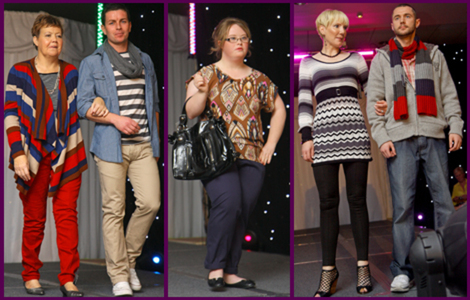
Dr. Janet Grey M.B.E. (second to last) is a blind world class skier and is seen here modeling for the Disability Action Fashion Show in September 2011 (Image: www.disabilityaction.org)
The fashion world has a long way to go in representing and accepting all forms of beauty. While it’s certainly admirable to see runway racism being exposed and brands easing off the Photoshop and using models with “real bodies”, only one type of body is being celebrated—the able-body. Almost all of the clothes made by designers and retailers are exclusively made for those who are above a certain height, under a certain weight, and have limbs that fill the clothes in all of the right places. Not a lot of people fit into that particular shape. For people living with disabilities, this segregation is disheartening and ignorant. It’s as though they’re pretending that people with disabilities don’t have an appearance.
For people with disabilities, finding clothes that fit their frames is a daunting and often disappointing struggle. The differences in their physical appearance (i.e. a neuromuscular disorder or bowed legs) can mean that store-bought jeans don’t break at the knee area or the sleeves on off-the-rack shirts are too long. Imagine trying to find an outfit that highlights what you feel are your best physical features only face constant rejection because your own body just doesn’t fit the standards. Your own physical appearance becomes a barrier in itself. For people with disabilities, just because they don’t conform to the industry’s standard, doesn’t mean that they don’t deserve the right to look and feel beautiful in their own bodies.
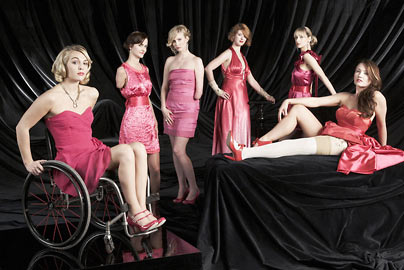
Beauty comes in all forms (Image: www.bbc.co.uk/missingmodel/models/)
Thankfully, there are those who actually see this lack of inclusion and are challenging the stereotype of disability in fashion. Models of Diversity is a British non-profit organization that advocates more diversity in the fashion, beauty, and marketing industries. The organization calls for the inclusion of modeling talent of different ages, sizes, abilities, and races. They’ve recently produced a short documentary that reveals tremendous amounts of campaigning in showing the world that people with disabilities can be successful models. Karen Bowersox launched the clothing line, Down Designs, after learning that her granddaughter, who has Down syndrome, had difficulty finding clothes that fit her properly. The clothes from Down Designs also address the challenge of buttons and zippers since many people with Down syndrome have dexterity problems. The clothing line allows people with Down syndrome to be independent and dress themselves while looking stylish. In 2009, noted Canadian fashion designer Izzy Camilleri launched IZ Adaptive Clothing, the first fashionable apparel line for men and women who are wheel chair bound due to their physical disability. The IZ Adaptive Clothing online store and Toronto-based boutique carries over eighty styles, from coats to menswear and evening wear, which displays Camilleri’s extraordinary attention to detail, sharp tailoring, and custom designs. Izzy Camilleri’s innovative designs and compassion shows the fashion that seated people can have their outfits without sacrificing style for practicality.
The world is full of different kinds of beauty. Because beauty is diverse, the fashion and beauty industry need to embrace the diversity in all forms and not hide it. Slowly but surely, the world will embrace a wider variety of body shapes on the catwalks and editorials in fashion magazines. One thing is certain: people, on some level, care about the clothing that goes onto their bodies. People living with disabilities deserve to be included in the fashion world since they have just as much right to great style, regardless of their physical differences.
